Design / Development / UX

LukeChmilenko.com: Custom Website Design & Build

Overview

Bringing the visual for a writer to the web.

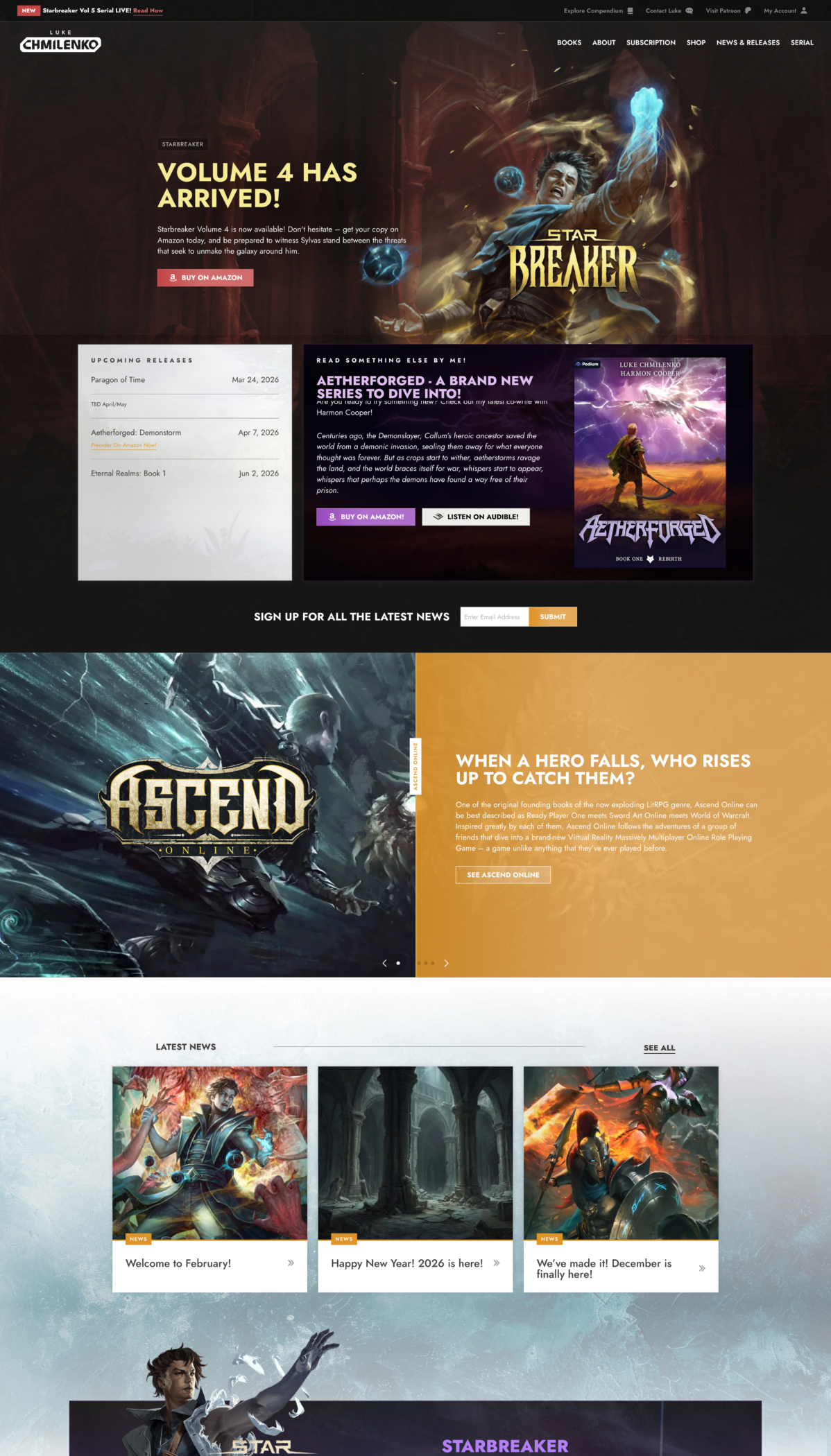
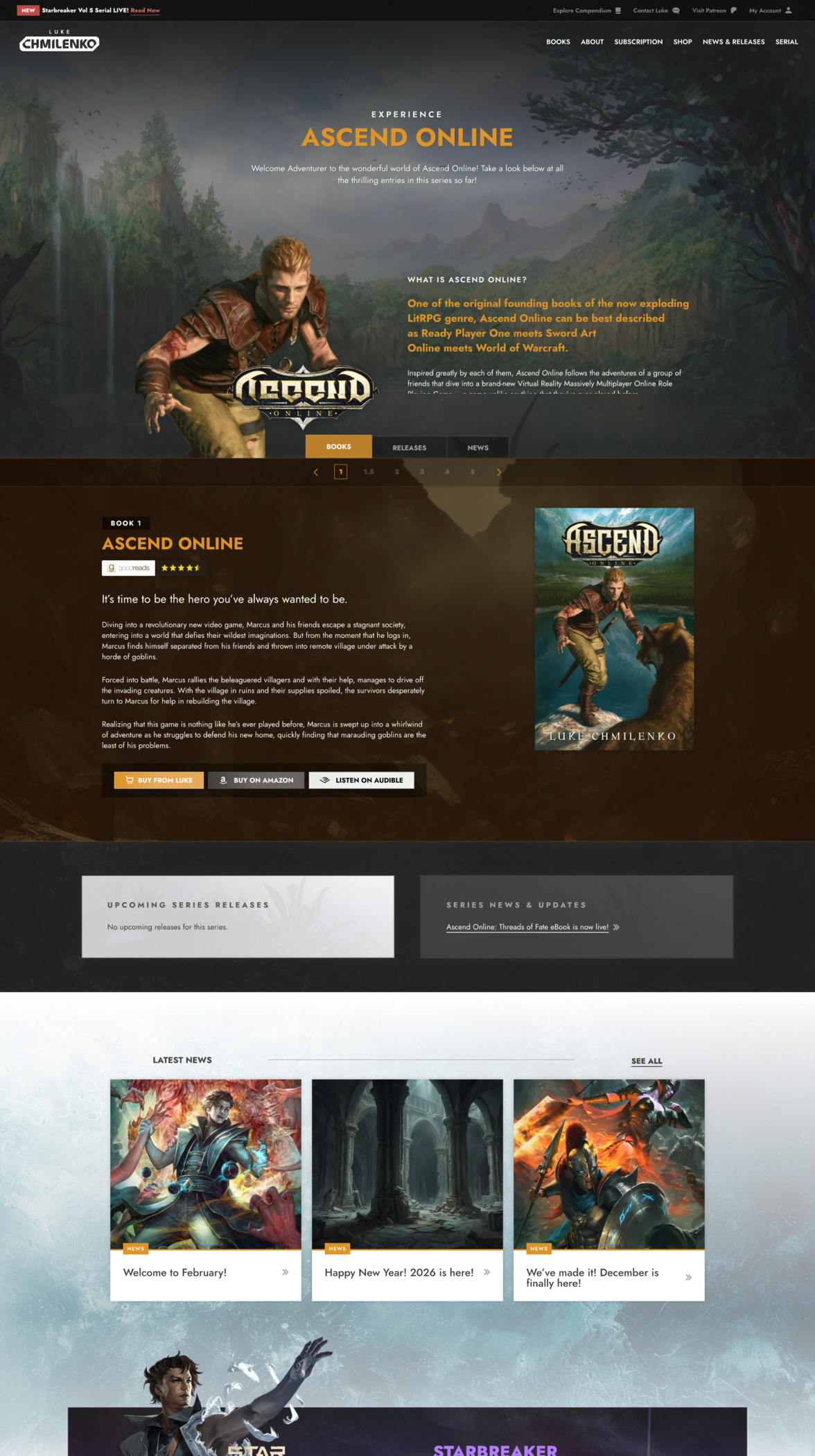
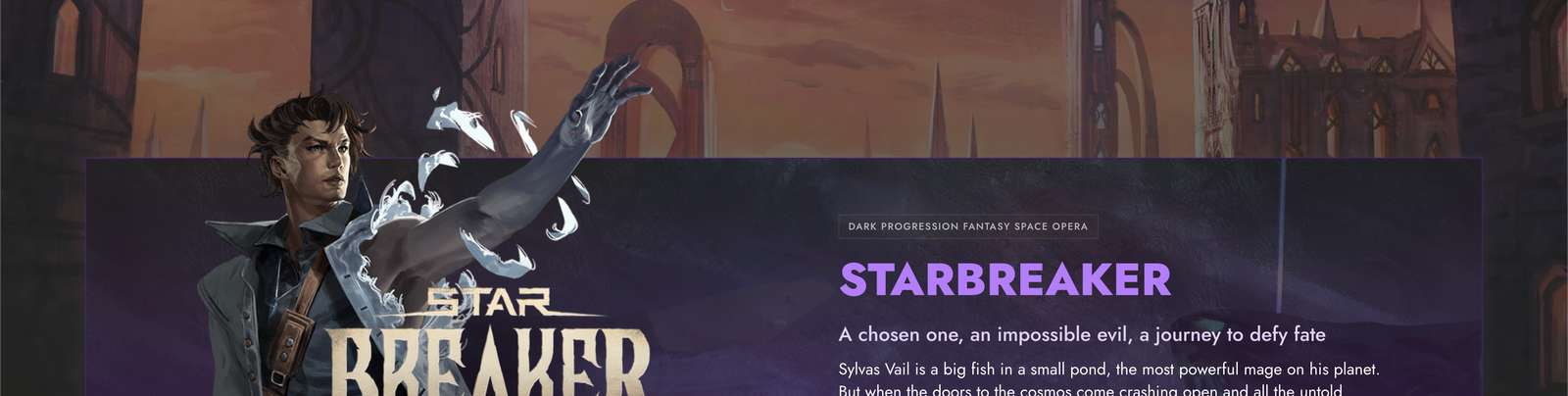
I had the opportunity to collaborate with Luke Chmilenko, a renowned author in the LitRPG genre, to rebuild his web presence, and give him a new face to carry him forward as he continues to generate popularity with his writings. He needed a visual presence that reflected his space and increasing notoriety, as well as a website platform and structure to help him scale this as time continued forward.

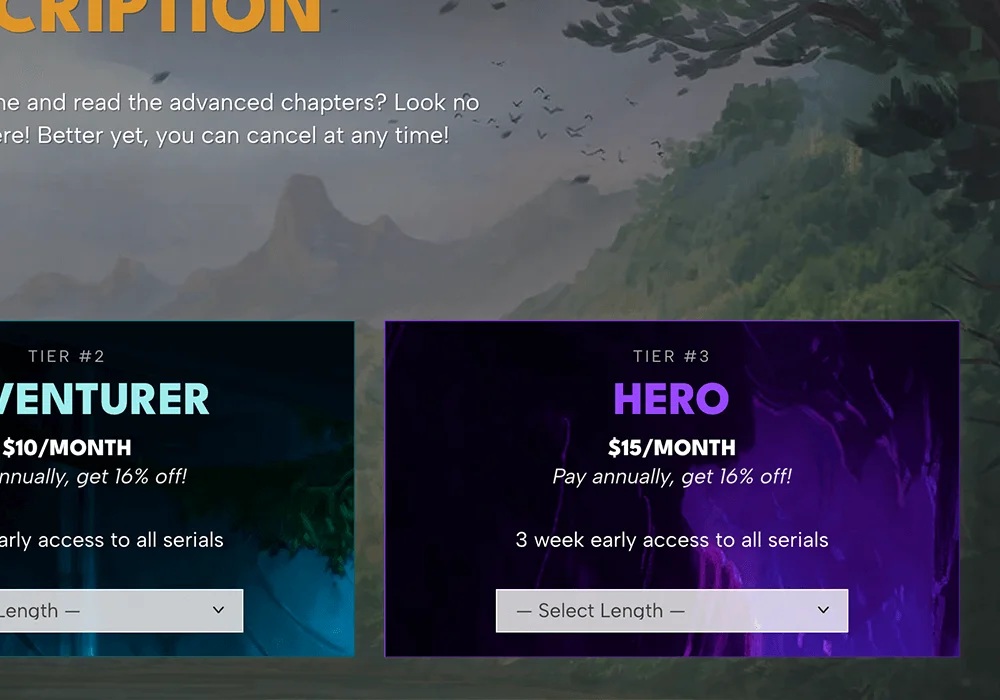
This required a set of functionality that would allow all of his series to be listed with detailed information, books, and how to buy, as well as marketed and presentable for new readers. It also needed to act as an initial landing pad for his baseline subscription service, where users could subscribe monthly to view serial-based content releases.
Project Intention

Define and impress

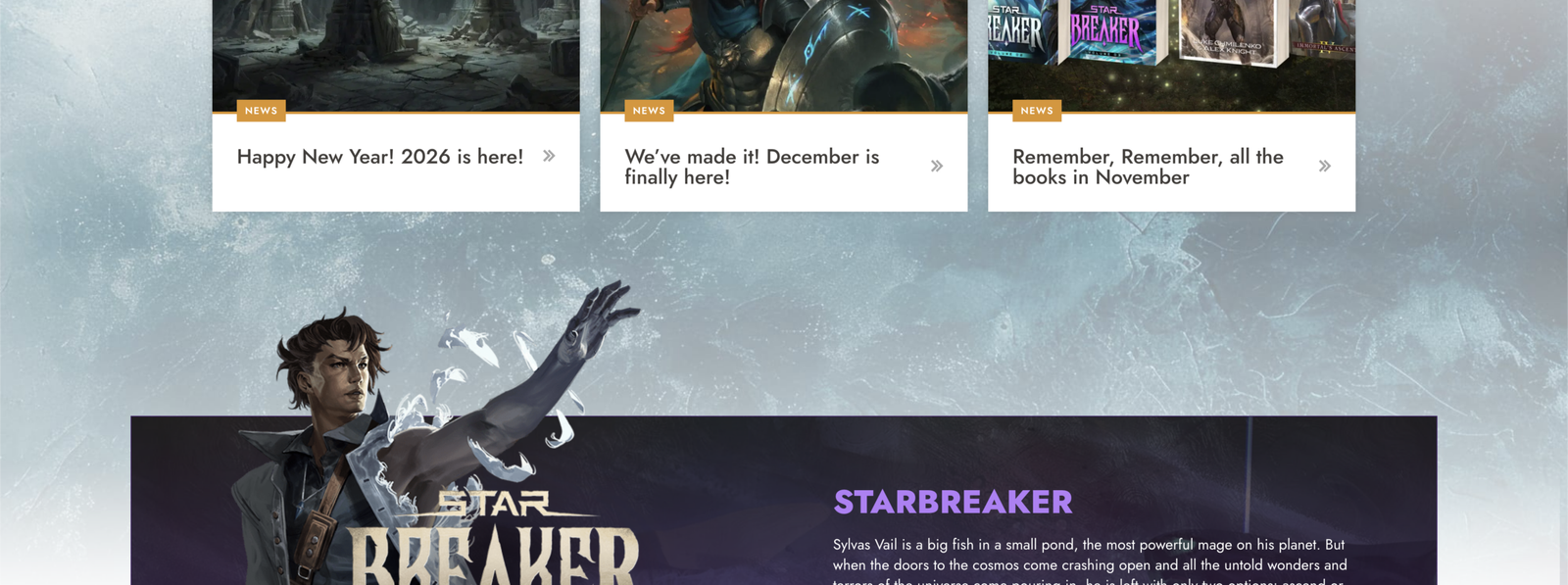
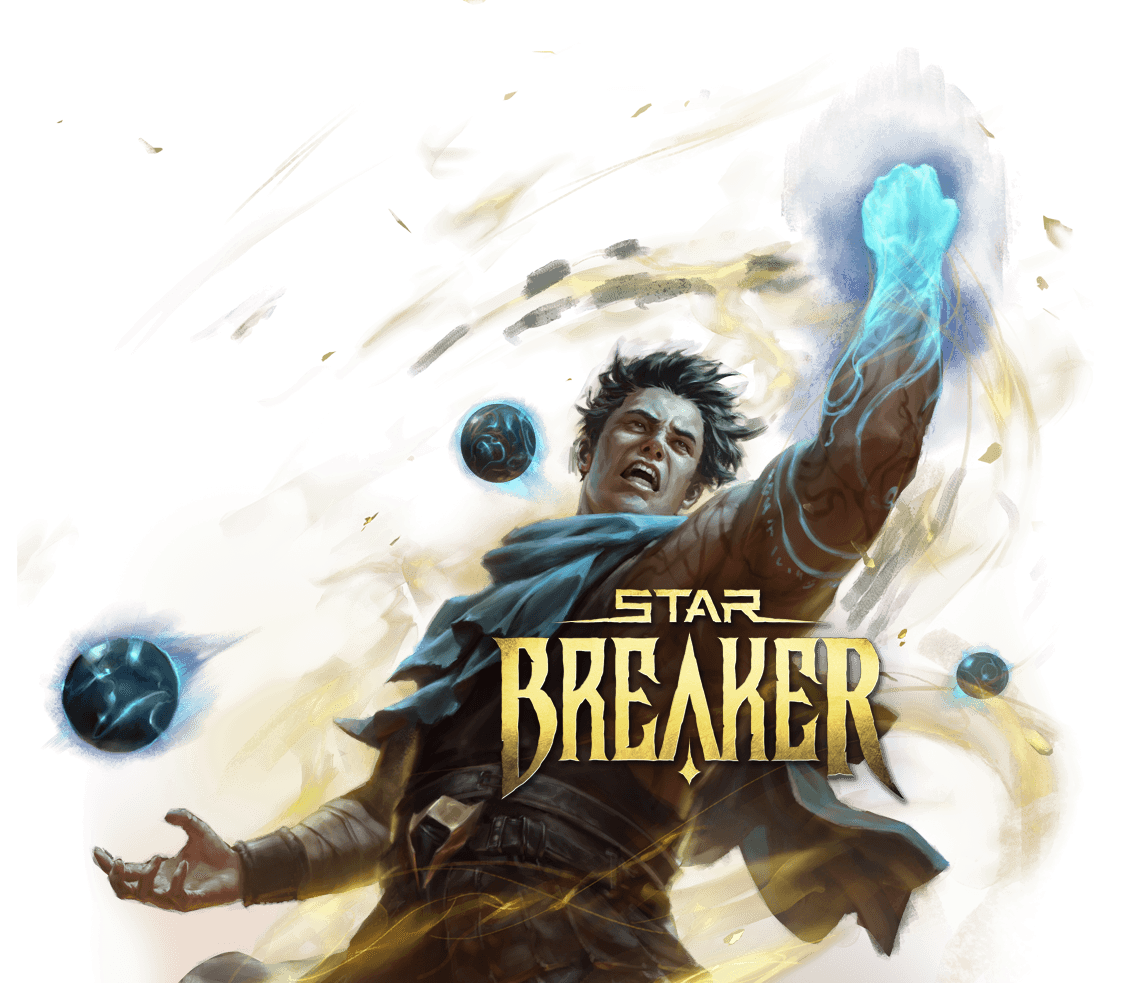
With Luke’s growing audience, it was important for his presence to evolve into a new stance that was structured, strategic, and ready for growth. Alongside of this, it needed to be prepared to create impact on his readership with announcements, character illustrations, and engaging visuals to keep visitors excited, with custom functionality to support the type of information that he wanted to present.

Genre-Focused

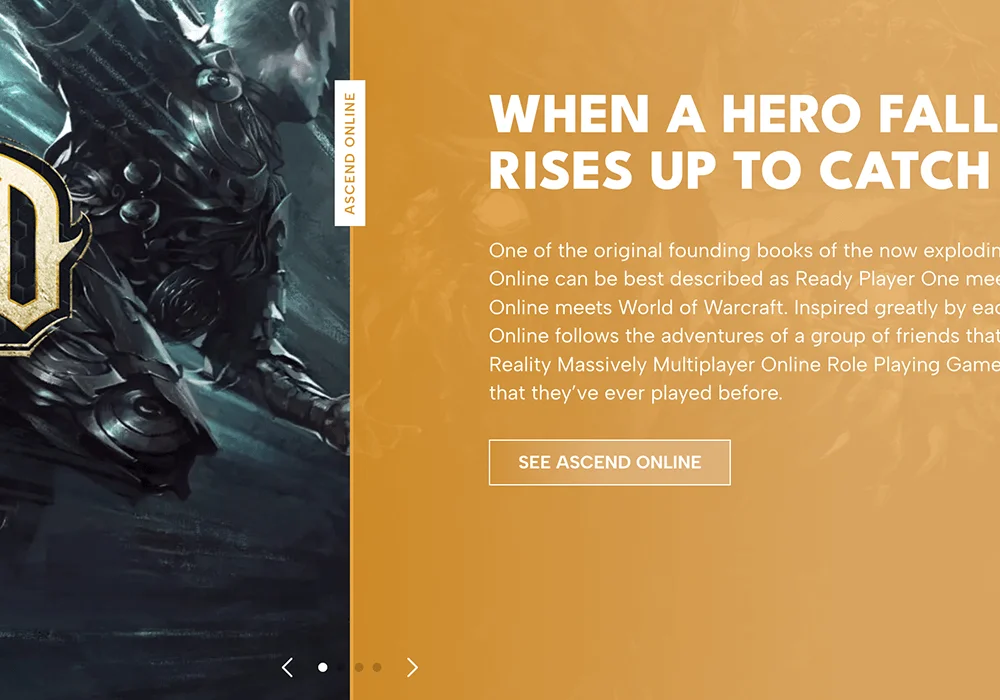
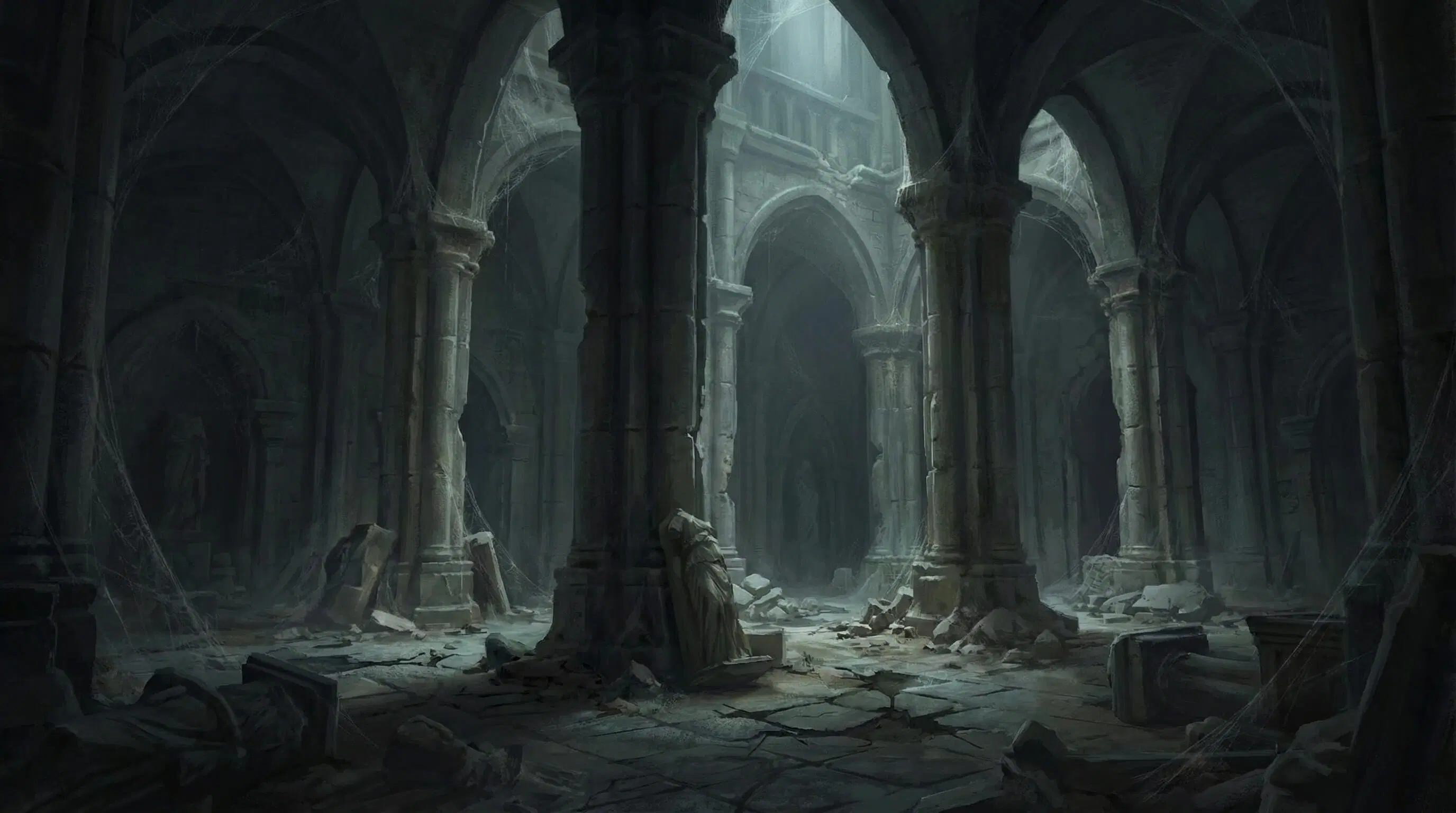
It was critical that the style spoke to his readership. Textures, illustrative graphics, “game UI” vibes, and smooth transitions championed this, grounding his new presence and making the user feel right at home.

Flexible for Growth

WordPress was a clear selection – I custom built a WordPress theme from the ground up, with a focus on total editability and flexibility for changes and evolution, ensuring new book pages required zero code, but allowed for maximum impact.

Professional Presence

With Luke continuing to gain traction and popularity, it was important to make sure that he was presented professionally in space that is incredibly competitive. Unique page layouts, appropriate text sizing/scaling, and proper usage of textures and fine details were a requirement.

Building a familiar environment

Creating an interface-style aesthetic that kept things very much in the LitRPG universe was a requirement. Thin borders, light shadows, subtle textures and gradients, and slight transparency helped to bring this vision to a forefront – all while ensuring usability was a primary focus.

Engaging with textures and depth

Flat only goes so far as an impactful trend. This particular aesthetic required some play on depth with the help of subtle shadows and glows, as well as overlapping graphics that broke free of their containers for further excitement. In combination with smooth transition movements on load and hover, a vibrant experience was created with relatively minimal heavy customization.

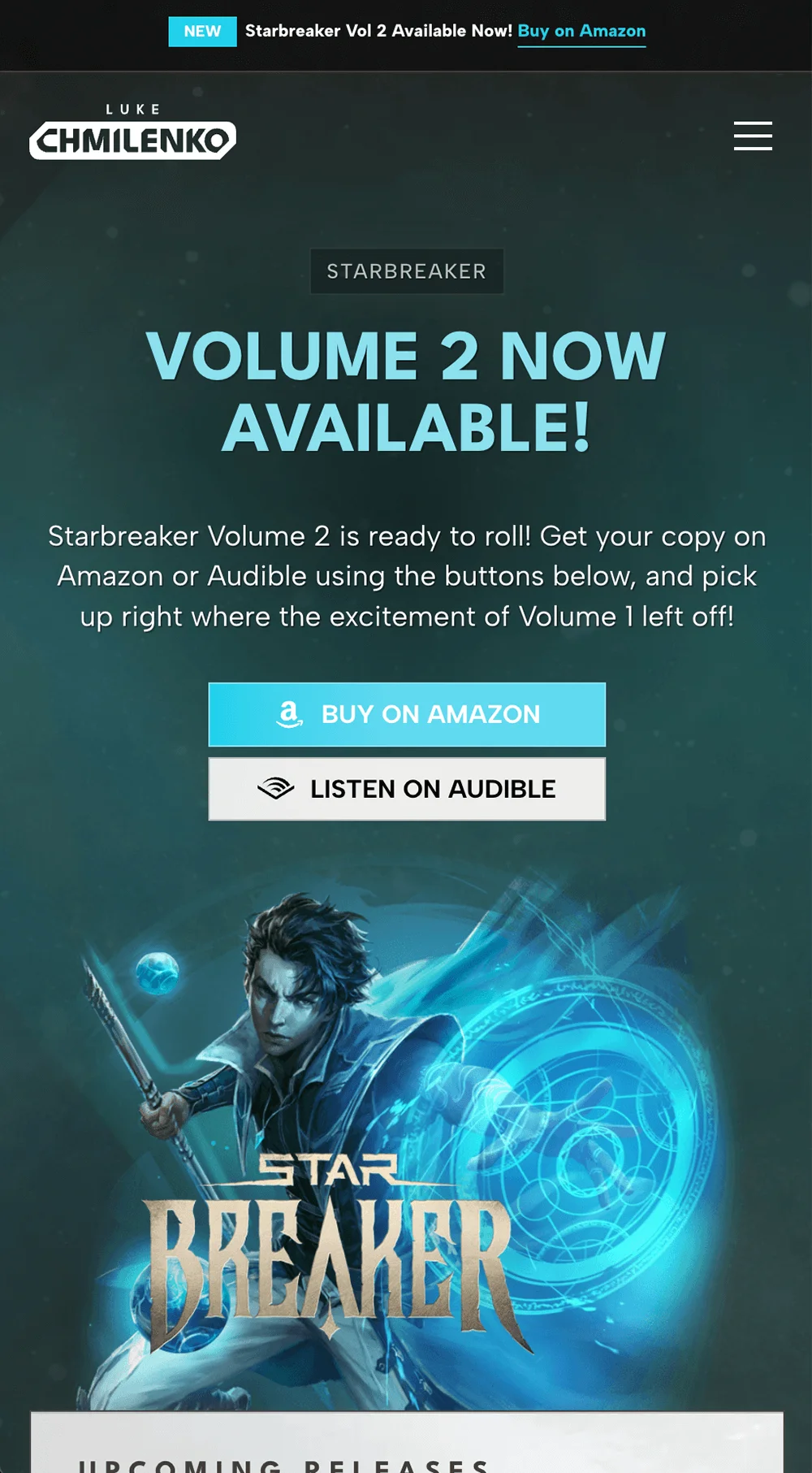
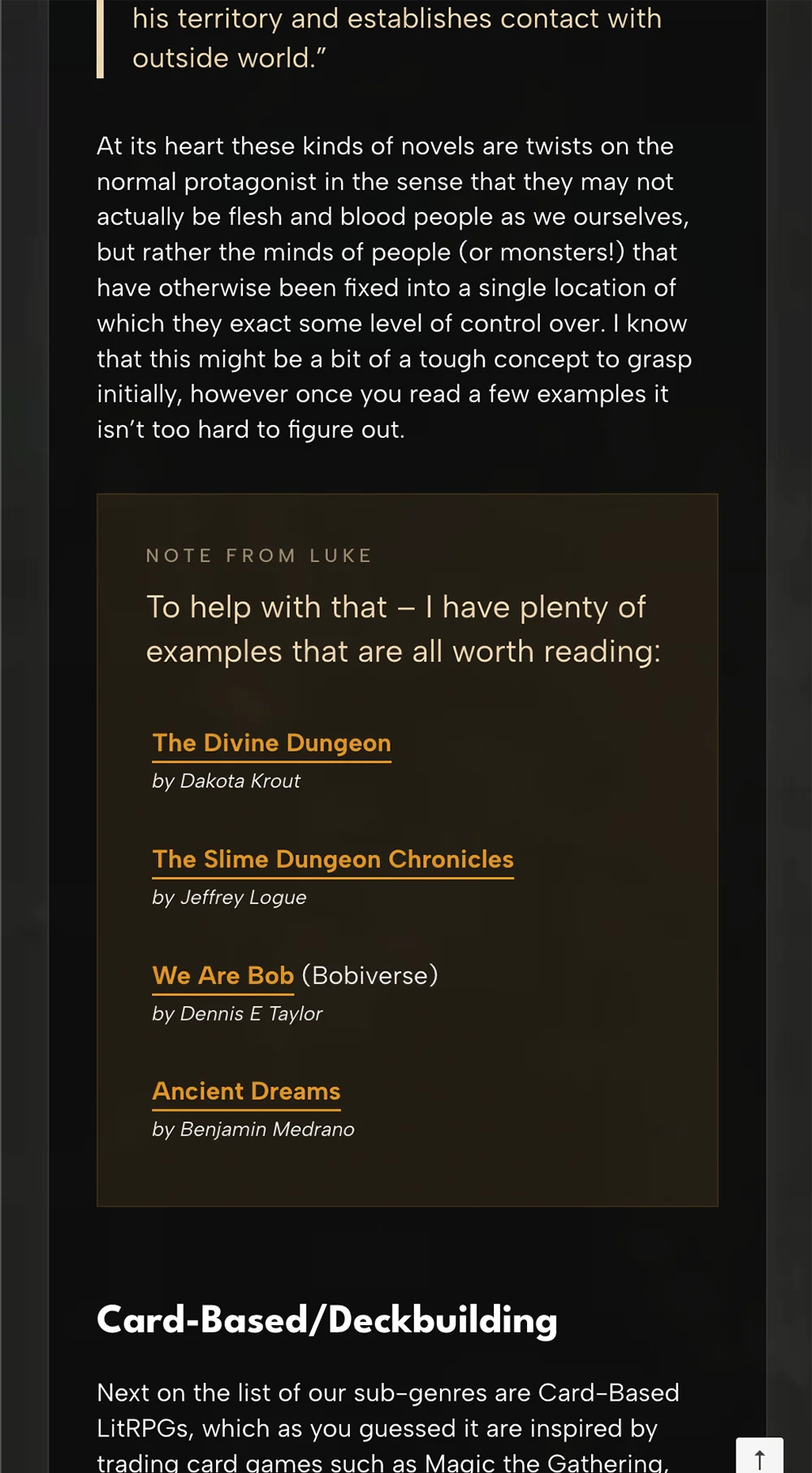
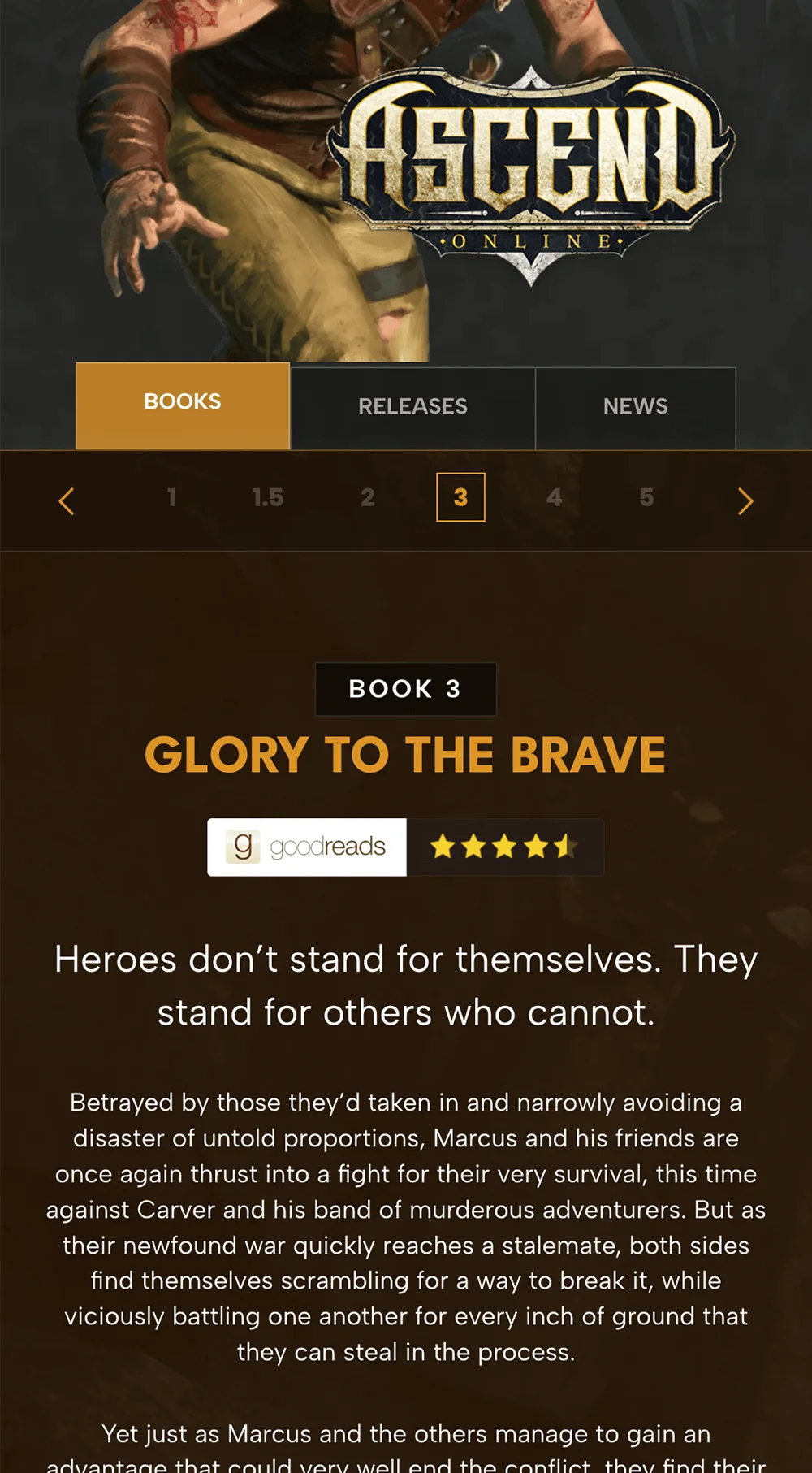
Device Screens

Closing Thoughts

With the opportunity that Luke presented to me to build this the way I thought it should be built, I embraced every facet of a good web development project I know and love:

  • Pre-project Scope-driven planning and mapping
  • UX-driven design process, including referencing past data
  • Custom WordPress theming for Luke, not regurgitated or bloated from another author or project
  • Custom functionality for managing his books, subscriber serial access, and WooCommerce integration, all tailored to his needs
  • Optimization and performance efforts, both during and after launch

What would I have done different if I had to do it again?

  • Even more user testing ahead of time. The client had specific deadlines to meet, so we needed to draw a happy medium, but another round of qualitative testing specifically would have done nothing but improve the initial outcome.
  • Not portrayed in this case study, but my monthly relationship is on going, so many opportunities since the original build were evolved and addressed using, including a complete user testing initiative that we rolled out 6 months after launch, where we unleashed a full suite of quant and qual testing (screen recordings, heatmaps, analytics behavior, curated user testing scenarios, anonymous polling, and community-focused feedback requests) to fill in any further gaps.